
Karnatic Vocal & Light Music
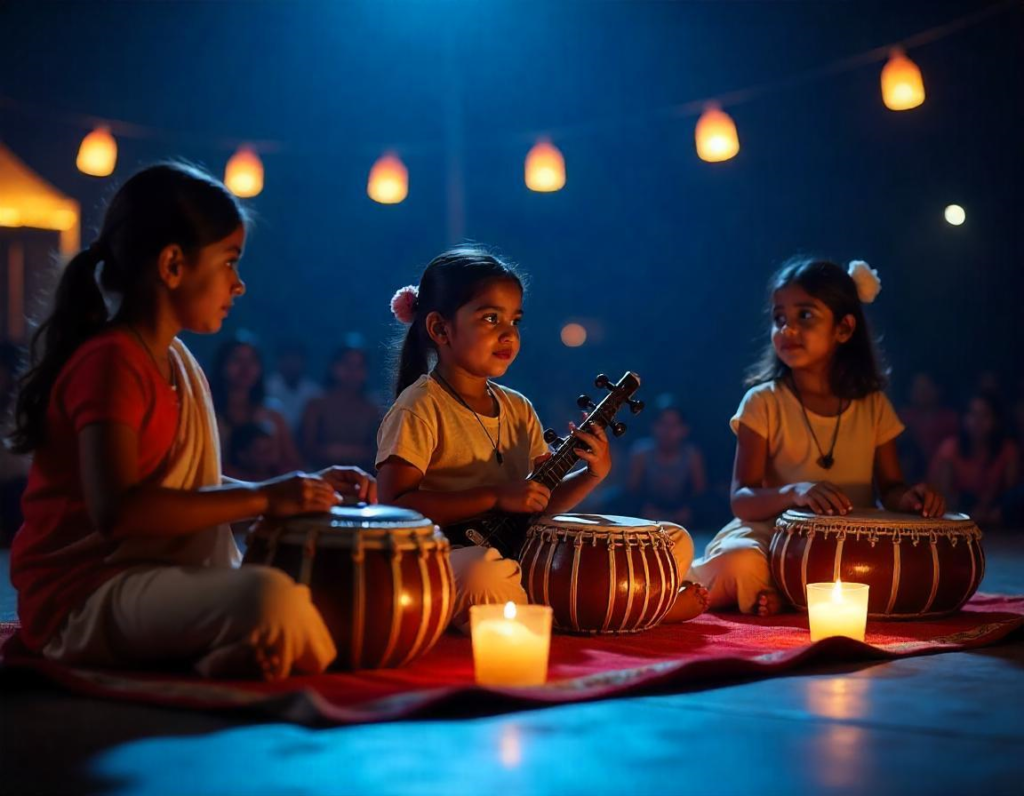
Carnatic music or Karnataka Sangita (known as Karnāṭaka saṃgīta or Karnāṭaka saṅgītam in the Dravidian languages) is a system of music commonly associated with South India, including the modern Indian states of Andhra Pradesh, Karnataka, Kerala, Tamil Nadu and portions of east and south Telangana and southern Odisha.
It is one of three main subgenres of Indian classical music that evolved from ancient Hindu texts and traditions, particularly the Samaveda.[1] (The other two are Hindustani music and Odissi music.) The main emphasis in Carnatic music is on vocal music; most compositions are written to be sung, and even when played on instruments, they are meant to be performed in gāyaki (singing) style.
Origin and history
Saraswati, the Hindu goddess of all knowledge, music, arts and science, with her instrument, the veena.
Like all art forms in Indian culture, Indian classical music is believed to be a divine art form which originated from the devas and devis (Hindu gods and goddesses),[8][9] and is venerated as symbolic of nāda brāhman.[10] Ancient treatises also describe the connection of the origin of the svaras, or notes, to the sounds of animals and birds and man’s effort to simulate these sounds through a keen sense of observation and perception. The Samaveda, which is believed to have laid the foundation for Indian classical music, consists of hymns from the Rigveda, set to musical tunes which would be sung using three to seven musical notes during Vedic yajnas.[9] The Yajurveda, which mainly consists of sacrificial formulae, mentions the veena as an accompaniment to vocal recitations.[11] References to Indian classical music are made in many ancient texts, including epics like the Ramayana and the Mahabharata.
Carnatic music outside of South India
From the 18th century, South Indian immigrant communities abroad increased, especially in Southeast Asia and Sri Lanka. Communities such as the Nattukottai Chettiars participate in the extension of the Carnatic cultural scene abroad, thanks to their rich patronage activity.[23] Carnatic music artists therefore perform abroad among South Indian communities who request their coming, in order to enliven local community life. For a long time in Sri Lanka, Carnatic music was associated with Indian immigrants, and was often derogatorily referred to as “thosai kade music” (“music from the dosa shop”), in reference to the South Indians-owned restaurants and eateries that typically played this kind of music.